
Working with FreshTrack: How Shippers and Carriers Onboard onto Morocco's Collaborative Logistics Platform
KEY TAKEAWAYS — READ IN 30 SECONDS
Introduction
Working with FreshTrack starts with onboarding — the practical sequence of connecting your systems, choosing an integration method, and validating the platform against a real shipment before scaling up.
This guide walks through what that process looks like for both shippers and carriers, so your team knows what to expect and can plan internal resourcing accordingly.
Note: this guide describes the general onboarding sequence for a collaborative logistics platform. For FreshTrack-specific screens, timelines, and account setup steps, your onboarding contact will confirm the exact current process.
The Core Onboarding Sequence
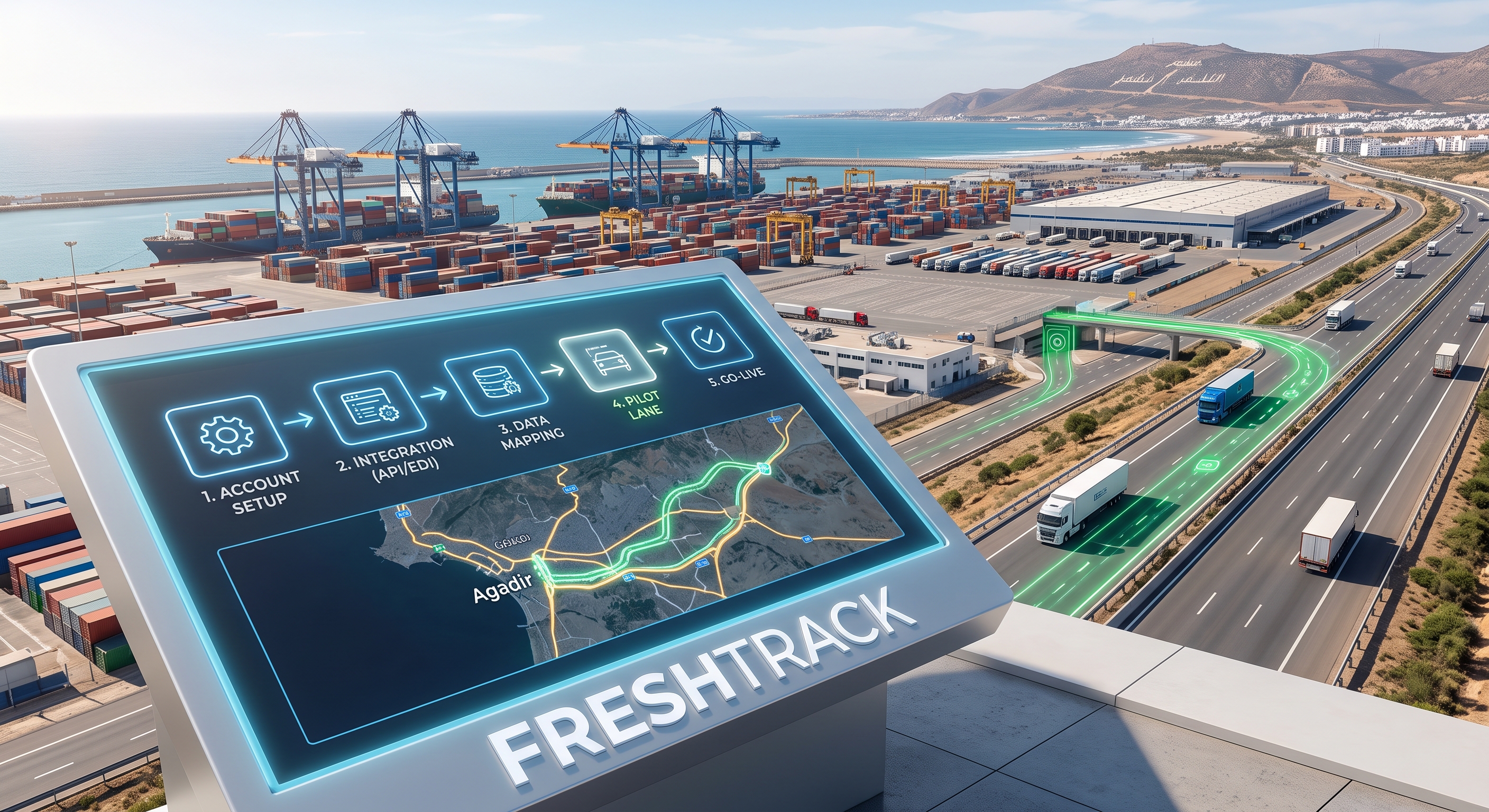
Regardless of whether you’re onboarding as a shipper or a carrier, the sequence follows the same general shape:
Account and organization setup. Creating your organization’s account, defining user roles, and setting initial permissions for who on your team sees and manages what.
Integration method selection. Choosing how your existing systems connect — a lightweight API integration for real-time status and booking data, EDI for high-volume standardized document exchange with established trading partners, or a combination of both.
Data mapping. Aligning your internal systems’ fields — shipment references, status codes, location data — to the platform’s shared schema. This is the step most likely to take longer than initially scoped.
Pilot lane. Running one real, active shipment lane through the platform before expanding, to validate that data flows correctly and the visibility matches operational reality.
Go-live and scale-up. Expanding from the pilot lane to your broader network once the pilot has validated the setup.
For Shippers: What to Prepare
Shippers typically move fastest through onboarding when they arrive with a clear picture of their current carrier and forwarder mix, the specific lanes they want visibility into first, and whichever existing TMS or ERP system needs to connect.
Identifying one representative multimodal lane — ideally one that’s given your team visibility headaches historically — as the pilot lane tends to surface integration issues faster than starting with your simplest, most predictable route.
For Carriers: What to Prepare
Carriers onboarding onto a collaborative platform should be ready to share fleet and equipment data, define which dispatch or TMS system will feed real-time location and status updates, and identify the shipper relationships they want connected first.
Because carriers often work across multiple platforms and shipper relationships simultaneously, the practical priority is usually connecting the specific lanes and shipper partnerships generating the most volume first, rather than attempting full network connectivity in the first phase.
Why Integration Method Is the Biggest Timeline Factor
The choice between API, EDI, or both determines onboarding speed more than any other factor.
A lightweight API connection for core visibility data can typically be live within days to weeks. EDI connections with established trading partners — particularly large retailers with specific transaction-set requirements — typically take longer, given partner-specific data mapping and compliance testing.
The practical approach most teams use: start with API for immediate visibility, layer in EDI connections in parallel rather than as a blocking prerequisite.
For the fuller technical breakdown, see API and EDI Integration for Logistics: Connecting Your ERP to a Collaborative Platform.
What Good Onboarding Support Looks Like
The pilot-lane phase is where a defined point of contact matters most — not just documentation, but someone who can troubleshoot data mapping issues and confirm the platform is reflecting operational reality accurately before you commit broader volume.
Onboarding support that disappears after account setup, leaving data mapping and pilot validation entirely self-serve, is a common reason platform rollouts stall internally.
Ready to Start Your Own Onboarding?
The fastest way to understand your specific onboarding timeline is to walk through your actual systems and lane mix with our team.
Request an onboarding consultation and we’ll scope a realistic plan for your organization before you commit internally.
Conclusion
Onboarding onto a collaborative logistics platform follows a predictable sequence — setup, integration, data mapping, a pilot lane, then scale-up — but the details that determine how fast you reach real value are integration method choice and how rigorously data mapping gets scoped upfront.
Starting with one real lane rather than a full migration is consistently the fastest path to a platform your team actually trusts.
Start with one real lane, then scale what works.
Onboarding consultation
Scope your FreshTrack onboarding around your real systems and lanes
Walk through your carrier mix, TMS or ERP setup, integration method, and first pilot lane with the FreshTrack team before committing to an internal rollout timeline.
FAQ — Frequently asked questions
How long does onboarding onto a collaborative logistics platform typically take?
It depends heavily on integration method: core visibility via API can be live within days to weeks, while full EDI integration with established trading partners typically takes longer and is usually run in parallel rather than as a prerequisite.
Should shippers or carriers onboard differently?
The core sequence is the same, but the preparation differs — shippers typically prepare carrier/forwarder mix and TMS connection details, while carriers prepare fleet and dispatch system data and prioritize their highest-volume shipper relationships first.
What's the biggest factor that slows down onboarding?
Data mapping — aligning your existing systems' fields to the platform's shared schema — is consistently the step most likely to take longer than initially scoped.
Why start with a pilot lane instead of a full rollout?
A single real, active lane surfaces data mapping and operational issues faster and with lower risk than attempting a full network migration before the setup has been validated.
What should I expect from onboarding support?
A defined point of contact through your pilot lane and go-live, not just self-serve documentation — particularly important for troubleshooting data mapping issues during the validation phase.
References
- Cleo, EDI vs. API and the Critical Role Each Plays in Ecosystem Onboarding — https://www.cleo.com/blog/edi-vs-api
- Gartner, Market Guide for Supply Chain Visibility Software — https://www.gartner.com/en/documents/3183220
Related reading: API and EDI Integration for Logistics · Logistics Platform vs. Point Solutions